The word “batik” gets used freely across a huge range of products, shirts, scarves, home décor, even phone cases, wherever a particular kind of swirling, organic pattern shows up. Technically, though, batik refers to a specific wax-resist dyeing process, not simply a visual style. A significant amount of what’s sold as batik today never actually went through that process at all; it’s printed fabric designed to resemble the look, produced considerably faster and at a fraction of the cost.
Neither version is inherently deceptive; printed fabric is often labelled honestly enough if you read closely. The confusion comes from how loosely the word itself gets applied across both categories without much distinction.
Why ‘Batik’ Is a Process Before It’s a Pattern
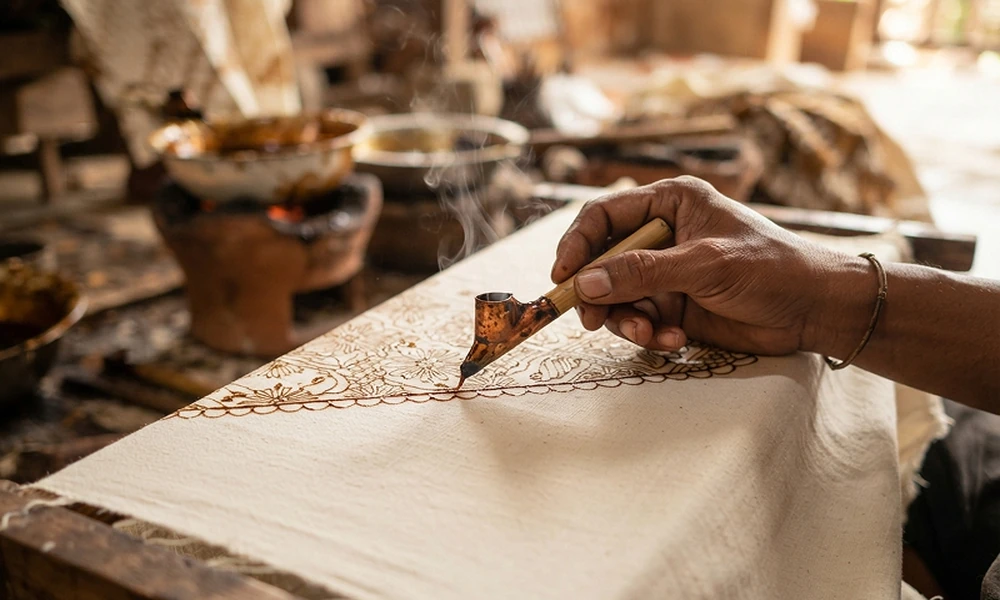
Traditional batik involves applying hot wax to fabric by hand, in the specific areas meant to resist dye, then submerging the fabric in a dye bath so colour only takes hold where the wax hasn’t been applied. The wax gets removed afterwards, revealing the pattern created by that resistance. This is a genuinely labour-intensive process, often requiring multiple rounds of waxing and dyeing to build up a complex, layered design. The resulting pattern carries small, organic irregularities that come directly from the handwork involved, details a machine print can approximate visually but doesn’t actually produce the same way.
Those small irregularities are really the tell. A printed pattern repeats with mechanical precision, while a genuinely hand-waxed piece carries the kind of subtle variation no two printing runs could ever produce identically.
Why This Distinction Matters When Actually Buying the Fabric
Knowing the difference between genuine wax-resist batik and printed fabric designed to mimic it changes what someone is actually paying for, and what to reasonably expect from the material itself. Authentic batik fabric carries the subtle variation and depth that comes from an actual dyeing process, characteristics that a flat, uniform print simply can’t replicate no matter how closely it mimics the visual pattern.
Why This Distinction Matters When Choosing a Finished Shirt
A shirt made from genuine batik fabric carries the same underlying qualities as the raw fabric itself, the subtle colour variation, the texture built up through repeated waxing and dyeing, details that give the finished garment a genuinely distinct character rather than a uniform, mass-produced surface. Printed imitations can look convincing at a glance, but they lack the tactile depth and individual variation that comes from an actual dyeing process, differences that tend to become apparent the moment the fabric is seen and touched in person rather than viewed in a photograph.
Why This Matters Specifically for a Men’s Shirt
A shirt gets worn close to the body, seen up close in everyday interactions, and handled directly far more than most other batik products, which makes the actual quality of the fabric considerably more noticeable than it might be on, say, a decorative wall hanging. A well-made men’s shirt in Singapore crafted from genuine batik fabric reflects this difference directly, offering a depth of pattern and texture that holds up to close, repeated wear rather than looking increasingly flat over time.
Why This Distinction Rarely Gets Explained at the Point of Sale
Retail listings tend to describe products simply as “batik” without clarifying whether the fabric actually went through the traditional process or was printed to resemble it, largely because the distinction adds complexity to a product description that most casual shoppers aren’t necessarily looking for. For anyone specifically seeking out authentic batik, though, that missing detail is exactly the information worth asking about directly before buying.
A simple question about how the pattern was actually applied tends to get a straightforward answer from anyone selling genuine, hand-waxed fabric with confidence.
The word “batik” alone doesn’t guarantee what’s actually behind a piece of fabric, and understanding the difference between the traditional process and a printed imitation tends to matter more the closer that fabric sits to daily, repeated use. A shirt worn often is exactly the kind of product where that distinction is worth knowing before buying, not after.
Knowing what question to ask is really the whole advantage here, and it costs nothing to simply ask it.
Curious about the difference between genuine and printed batik in person? Contact Anmako Singapore to see and feel the difference for yourself.